By Anna Caraveo
From the beginning of the creation of the city of Los Angeles, as individuals were migrating west for more jobs it attracted many. There are many things that played a part in the quick rise and growth of Los Angeles. For example, with the help of the rise in film in the 1920s, Los Angeles became glamorized. Since most movies were filmed locally at this time of technology, and people saw celebrities, the beach, the tabloids, and the movie premieres. Additionally, the music industry and the culture that was brought here helped illustrate this glorified city. In actuality, this was nowhere near the case. Other factors include the arrival of the Brooklyn Dodgers in 1957 and Disneyland in Orange County. Does America continue to advertise this city as an oasis through media in 2023 or do they do a good job at providing the facts and reality of the city?
In the book, “Hollywood Cinema and the Real Los Angeles” the author Mark Shiel explores the relationship between the two. Shiel argues that our depiction of Los Angeles in Hollywood films has ultimately shaped our perceptions of the city and has contributed to the creation of a distinct “Hollywood” aesthetic. He further elaborates on issues of race, class, and urban development that have shaped the city’s physical and social landscape, and how Hollywood films reinforced or challenged these dominant narratives. The author mentions several times that these narratives were certainly not the actual reality of Los Angeles. Sheil states that “Los Angeles in Hollywood cinema is a constructed and abstracted space, a city of dreams and illusions, of glamour and violence, of hope and despair. It is a city that is at once familiar and alien, that we recognize and yet do not fully understand. It is a city that has been shaped and defined by Hollywood cinema, even as Hollywood cinema has been shaped and defined by it.” (Shiel). Mark Sheil emphasizes the diversity and complexity of Los Angeles and not just the distorted representations of the city in Hollywood cinema. In Hollywood films and popular culture, there was no light shed on LA’s social, economic, and cultural dynamics and Sheil argues this should not be the case.
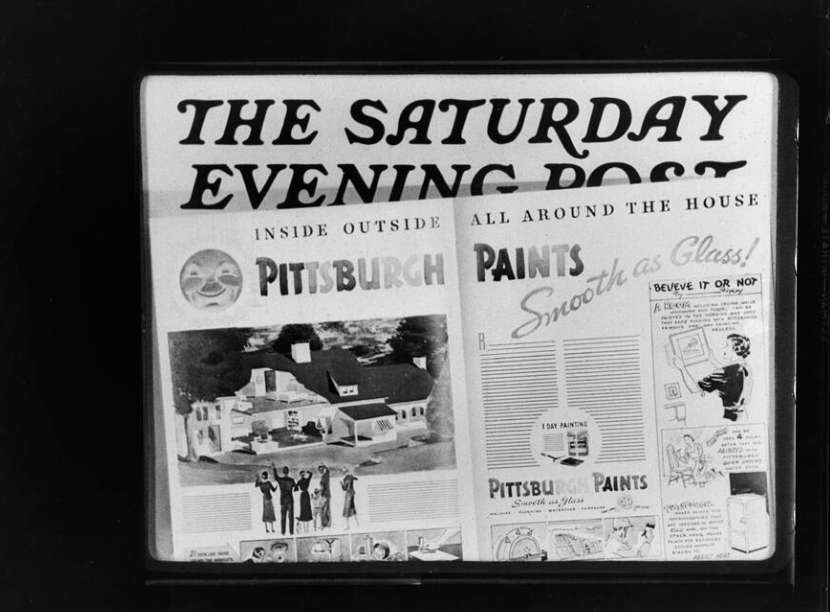
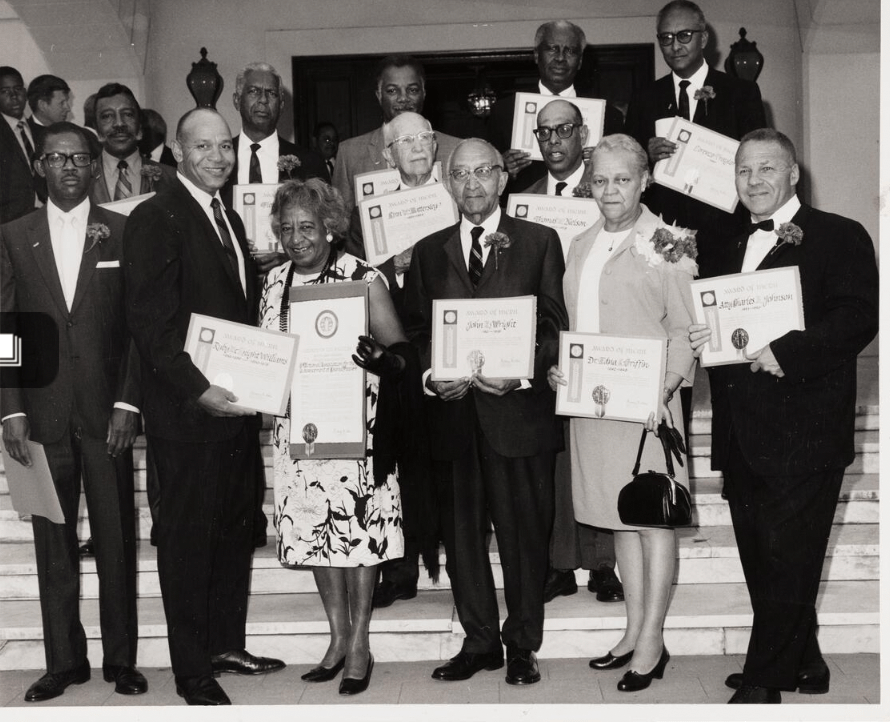
Not only were the films depicting a hindered perspective of the city, but in reality, Los Angeles was becoming one of the most diverse cities of its’ time. The author Eric Avila wrote an essay that appears in the book titled, “Popular Culture in the Age of White Flight: Fear and Fantasy in Suburban Los Angeles”. The essay is titled “The Nations ‘White Spot’: Racializing Postwar Los Angeles”. Avila elaborates on ways in which race and racism shaped the development of postwar Los Angeles, particularly in relation to the city’s suburbanization and the emergence of white flight. He argues that LA was constructed as a “white spot” in the national imagination. It seemed as though whiteness was the norm and non-white populations were marginalized or excluded. He states, “Against this backdrop, a suburban popular culture materialized, positing a racialized vision of the city as “the nation’s white spot” and as the very image of “whiteness, flatness, and spread”. The author continues to elaborate on how we eventually learn this was not the case. Similarly to the previous author Mark Sheil, Avila shows how this idea was formed and reinforced through film, television, and other advertisements. Avila also adds that “The arrival of the Brooklyn Dodgers in Los Angeles in 1957 marked the incorporation of Los Angeles into the big league of American cities, and while that move signaled the public’s expanding and enduring fascination with the national pastime, it also illuminated the shifting paradigms of popular culture in the age of white flight”. However, Avila’s main argument is how people of color in LA challenged this racialized narrative and fought for greater inclusion in the city. The author mentions the broader topics we discussed in this section. He dives into the role of civil rights organizations, community activists, and cultural producers in challenging the illustration Los Angeles held. Avila indulges in these groups that played a key role in creating spaces of resistance and empowerment within the city. These groups such as the National Association for the Advancement of Colored People (NAACP) and the Congress of Racial Equity (CORE), which worked to challenge discriminatory practices in housing, education, and employment and played a key role in urban development. The author further elaborates and brings up the Chicano Moratorium which is a cultural and political movement that emerged in response to the Vietnam War and the disproportionate impact of the draft on Chicano communities. The author cites, “The creation of these cultural spaces was critical in the formation of new identities that challenged the dominant order of racialized power in Los Angeles. These new identities, in turn, helped to forge new modes of resistance and protest that engaged a wide range of social actors and cultural producers”(Avila). These efforts were often met with resistance and repression from the city’s political and institutional powers, but they ultimately contributed to a more diverse and dynamic urban landscape in Los Angeles.
In the course, reading Jack Schneider’s “Escape from Los Angeles: White Flight from Los Angeles and Its Schools” explores the history of white flight from Los Angeles and its public schools during the 1950s post-World War II era and on. It traces the phenomenon being driven by racial anxiety, political conservatism, and the idea of educational quality plummeting in public schools. He adds that throughout the postwar period, white families in LA, “began to see the public schools as increasingly fraught. They worried that their children would be exposed to poor academic standards and be harmed by integration, and they believed that the schools would not provide the preparation their children needed for the rapidly changing economy”(Schneider). He argues that this is what led many white families to abandon the public school system and seek alternative options like private institutions in suburban school districts. Throughout the chapter we read and the additional research I conducted, I found that he continued to base this and argue that migration contributed to the fragmentation of the city which led to the continuous segregation in schools and neighborhoods. He states that “The middle-class exodus from Los Angeles was fueled in large part by a fear of crime, a sense of disorder, and a deepening concern over the quality of public education.” (Schneider). While citizens across the country believed this city to be the best place to start their life, it is important to recognize that parents did not even want their children to get an education here. It raises important questions about the ongoing struggle for educational equity and the role of race and class in shaping educational opportunities in America’s cities.
Adding to the broad perception of this glamorized city, the author Tom Sitton wrote a book called “Metropolis in the Making: Los Angeles in the 1920s” where he shares his opinions and knowledge on the topic. He begins by mentioning the very small original population of citizens in LA, however, how the 1920s played a part in transforming it into a modern metropolis. In this reading, the author takes his time to examine the business practices of early movie studios, the emergence of major stars, and the impact this all had. However, what struck me the most in this work is the emphasis on women’s roles in society and the ways women challenged gender roles. The film industry played a role in continuing the “housewife” character role. However, in LA things were rapidly changing due to the growth and migration. Fashion trends were conforming to the flapper style, in which the author emphasizes shorter hemlines and looser, more comfortable clothing. This new fashion was seen as a symbol of women’s liberation and rejection of these “traditional roles”. It is important to recognize that although this town’s perception has been created by directors and producers, all men, were also creating a perception of the perfect wife that cooks and cleans and talks only when talked to. Los Angeles was slowly turning into a city that provided opportunities for change but, along with segregation and racism, LA was also plagued with sexism.
In the course reading, “City of Inmates: Conquest, Rebellion, and the Rise of Human Caging in Los Angeles” by Kelly Lytle Hernández the author indulges in showing the reality of the city. Hernández argues that the prison system in Los Angeles was designed to control and punish racial and ethnic minorities such as African Americans and Mexicans. The specific point of the book that I want to mention is a street called Central Avenue which is a historically African American neighborhood. Hernández describes this street to be a cultural and economic hub for African American individuals. However, as the city’s population grew, its prison systems expanded and Central Avenue became a target for policing which led to further repression. It is important to note the white individuals were coming over to utilize this hub for fun and then would return back to their suburbs. They would utilize it for their leisure and pleasure and reap the benefits without being affected by repression and surveillance. The targeted policing poisoned this hub and mentions how movies and other media depicted prisoners and prisons in a way that reinforced racial stereotypes and negative perceptions of minorities. Prisons, as a tool for social control, continued to marginalize the community and continued to keep a racially motivated perspective on Los Angeles.
Ultimately it is clear that Los Angeles is not this “city of Angels ” as they make it out to be. Los Angeles has faced and continues to face segregation and repression and poverty. The film industry’s rise in the 1920s played a huge role in illustrating a picture-perfect city. When we dive deeper into the history of the city we find that this is absolutely not the case. Whether it be social and racial movements or in more current times we see similar issues involving race and imprisonment and new issues such as homelessness. During the peak of the global pandemic of coronavirus, The Black Lives Matter movement created a place for individuals to continue to fight for equality. Movement leaders such as Martin Luther King Jr. and Malcolm X were heavily quoted during this movement and it distinctively shows this continuous fight for equality that we have been fighting for since even before the post World War II and the rise of filmmaking in Hollywood. We can also recognize the prison system still being a huge ethical problem in Los Angeles. It is clear that the United States has been criticized for disproportionately incarcerating people of color, including Los Angeles. Studies have shown that people of color are overrepresented in the Los Angeles County Jail. According to the data from the Vera Institute of Justice, in 2019, Black people made up only 9% of the Los Angeles County population but accounted for 30% of the county jail population. Similarly, Latinx people made up 49% of the country’s population but accounted for 43% of the jail population. One huge contributing factor, similar to the issues on Central Avenue, is racial bias in policing. This is a slippery slope because the prison systems continue to promote this racial segregation. The Los Angeles County jail has a history of separating inmates by race which has led to tensions and violence between different racial groups. The practice of racial segregation has been officially banned by the jail’s policy, but still occurs informally, especially in the housing units where inmates are allowed to choose their cellmates. A classmate of mine shared his personal story of working with a DA in Los Angeles. He mentioned that it’s a known thing that correctional officers will participate in and enable this racial segregation. He mentioned that once you enter prison you don’t leave prison without being in a gang. These disparities have had a slow progression and many advocates still push to continue for more comprehensive reforms to address this issue.
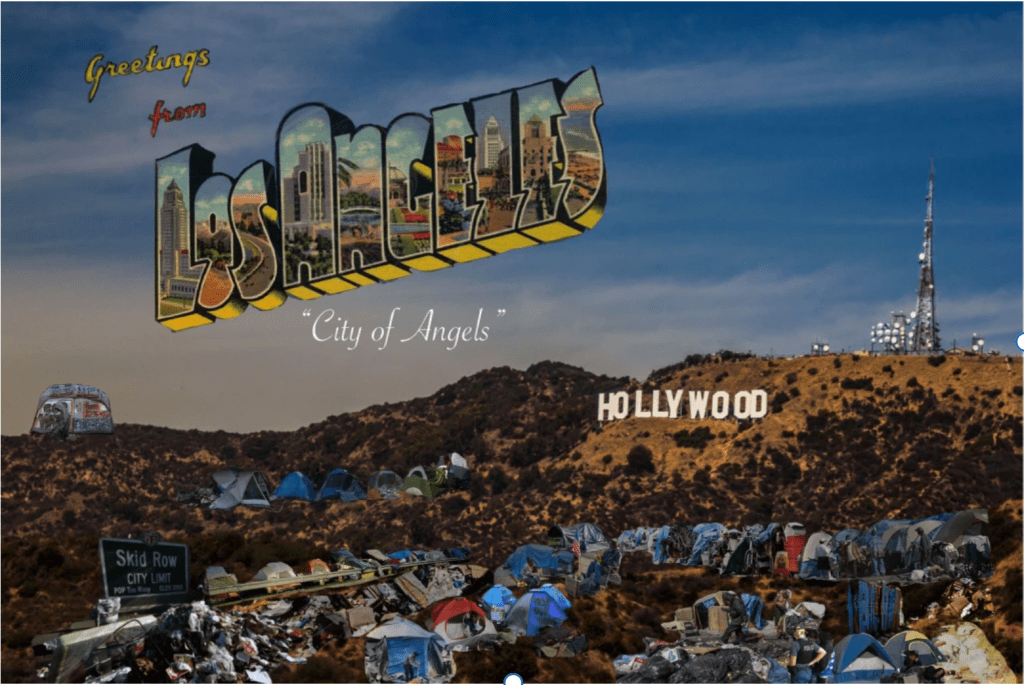
In 2023 we see a rise in homelessness in the city of Los Angeles. LA is one of the largest homeless populations in the United States. According to a 2021 report by the Los Angeles Homeless Services Authority (LAHSA), there were an estimated 41,290 people experiencing homelessness in Los Angeles County on a given night in January 2020. The causes of homelessness in Los Angeles are combined with economic, social, and political factors that are also contributing to this problem. The high cost of housing in the city has led to a shortage of affordable housing and leaves many with nowhere to turn to. On the rise of the global pandemic, it also created a significant impact on homelessness in Los Angeles. it created the problem by causing job losses and economic instability.
Call Los Angeles continues to grow its popularity and population. According to the US Census Bureau, the population of Los Angeles was estimated to be over 3.9 million people in 2020, making it the second most populous city in the United States after New York City. With that being said, as far as my question goes, on America’s advertisement of this city openly and honestly, I would argue no. I do not think that this city does a good job of accurately depicting the true realities of being a native of Los Angeles. This project showed me the extreme parallels between this course’s themes. The city uses the idea of celebrities, musicians, sports teams, food and art scenes, and job opportunities to bring in tourists and new residents. However, what they aren’t seeing is the reality of this impoverished city. It is a money-hungry city that is designed to keep the rich, rich and the poor, poor.
Works Cited
2020 Greater Los Angeles Homeless Count Results. Go to main LAHSA website. (n.d.). Retrieved April 15, 2023, from https://www.lahsa.org/news?article=726-2020-greater-los-angeles-homeless-count-results
AVILA, ERIC. “The Nation’s ‘White Spot’: Racializing Postwar Los Angeles.” Popular Culture in the Age of White Flight: Fear and Fantasy in Suburban Los Angeles, 1st ed., University of California Press, 2004, pp. 20–64. JSTOR, http://www.jstor.org/stable/10.1525/j.ctt1pntsk.7. Accessed 15 Apr. 2023.
Awards of Merit for NAACP Members, photograph
California: The State of Incarceration. California: The State of Incarceration | Vera Institute of Justice. (n.d.). Retrieved April 22, 2023, from https://www.vera.org/california-state-of-incarceration/county/Los%20Angeles
Dick Whittington Photography Collection, 1924-1987 (collection),
Hernández, K. L. (2020). City of inmates: Conquest, rebellion, and the rise of human caging in Los Angeles, 17711965. UNIV OF NORTH CAROLINA PR.
Pictures: LOS ANGELES AREA FILM STARTS RISE; 59 AS OF JULY 1. (1976, Sep 29). Variety (Archive: 1905-2000), 284, 6. Retrieved from http://libproxy.usc.edu/login?url=https://www.proquest.com/magazines/pictures-los-angeles-area-film-starts-rise-59-as/docview/1401296748/se-2
Schneider, J. (n.d.). Escape from Los Angeles: White flight from Los Angeles and its schools … Retrieved April 11, 2023, from https://journals.sagepub.com/doi/10.1177/0096144208317600
Shiel, M. (2012). Hollywood cinema and the real Los Angeles. Amazon. Retrieved April 11, 2023, from https://www.amazon.com/Hollywood-Cinema-Real-Los-Angeles/dp/1861899025
 Anna’s Blog